Bimetallic roof screws are widely used in European house construction. Why are they so popular among architects? Today, we will explore this, here’s a breakdown of its advantages and disadvantages from performance, application scope, and durability perspectives:Bi-Metal Screw
✅ Advantages
Efficient Self-Drilling & Self-Tapping Installation
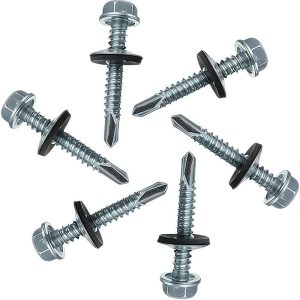
The screw features a drill-point tip that eliminates the need for pre-drilling. It can directly drill and tap into substrates like color steel plates and wood with a power tool, significantly improving installation efficiency for roofs and steel structures.
Bimetallic Construction for Rust Resistance & Durability
Typically designed with a carbon steel drill tail and stainless steel/galvanized coating, paired with a waterproof cap with an EPDM rubber washer. This ensures both drilling strength and effective rust resistance in outdoor humid, high-corrosion environments, extending service life.
Reliable Waterproof Sealing
The integrated black rubber washer compresses when tightened, creating a tight seal against the panel surface. This effectively prevents rainwater from seeping through screw holes, making it ideal for waterproof-critical applications like roofs and exterior walls.
High Versatility
As shown in the images, it works with multiple substrates including color steel tiles, wood structures, and metal frames. It is suitable for roof fastening, photovoltaic bracket installation, fence construction, and more.
Large Flange Head Design
The wide hexagonal flange head distributes pressure to prevent denting or tearing of thin panels during tightening, while also enhancing the screw’s pull-out resistance.
❌ Disadvantages
Higher Cost Than Standard Screws
The bimetallic manufacturing process, rubber washer, and self-drilling structure increase production costs, making the unit price significantly higher than ordinary self-tapping screws.
Sensitive to Installation Torque
Excessive torque from power tools can damage the rubber washer or break the screw, while insufficient torque compromises waterproof sealing. This requires careful operation by installers.
Prone to Drill-Tip Wear
The drill tip can dull when used frequently on hard or thick metal panels, necessitating frequent screw replacements and increasing operational costs.
Risk of Galvanic Corrosion
Despite galvanization, contact between carbon steel and stainless steel may cause electrochemical corrosion, leading to rust over time in high-salt environments like coastal areas.
Difficult to Remove
The self-tapping thread grips tightly to the substrate, often causing stripping during removal. In many cases, the screw must be damaged to be extracted, making it unsuitable for frequently disassembled applications.