1. What Are Wood Screws? Structure, Material, Uses & Selection
Core Keywords: wood self-tapping screw (309 monthly searches), small wood screws (20 monthly searches)
1.1 Definition & Core Value
Wood screws are fasteners designed specifically for wood substrates, secured by rotational insertion. Their key advantage is compatibility with wood fibers—unlike regular screws (fine threads, small pitch) for hard materials like metal/plastic, wood screws’ specialized structure firmly grips wood fibers, preventing wood cracking and enhancing connection stability. Core functions: ① Connect wood to wood/other materials; ② Transfer loads and distribute stress; ③ Enable detachable and reusable connections.
1.2 Key Structural Features
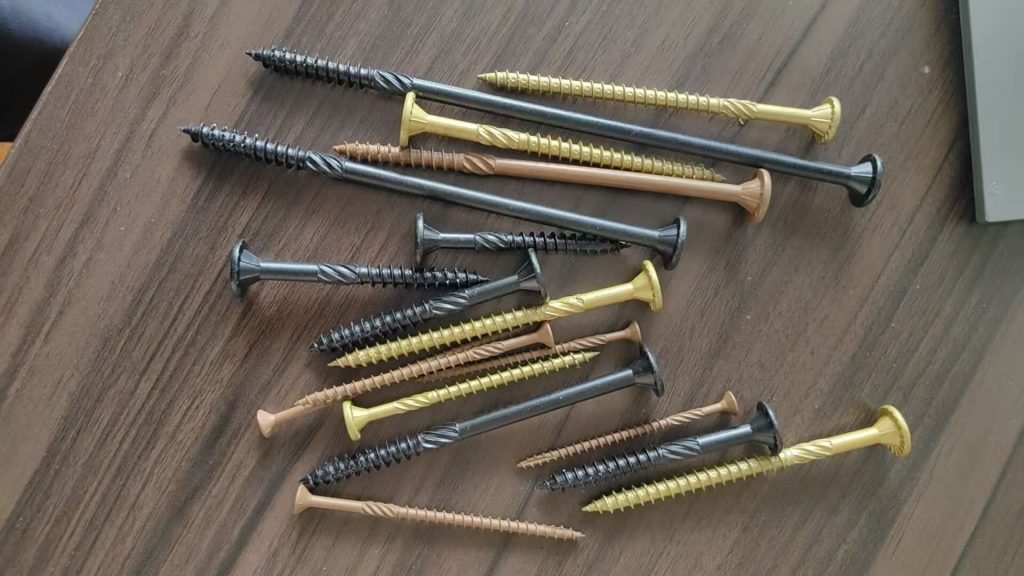
- Thread design: Deep threads (1/3~1/2 of shank diameter) with large pitch, boosting bite force by over 40% vs. regular screws.
- Tip craft: Sharp conical tip for quick wood penetration without pre-drilling (ideal for softwood).
- Common head types:
- Countersunk: Flush with wood surface (suitable for sanding/painting, e.g., furniture panels).
- Pan head: Raised design for higher load-bearing (hidden areas like furniture inner frames).
- Round head: Aesthetic, for decorative wood products (e.g., wood crafts).
1.3 Material & Surface Treatment
| Material | Core Traits | Application Environment | Surface Treatment |
| Carbon steel | High strength (400~1220MPa tensile), low cost (1/3 of stainless steel) | Indoor dry areas | Galvanized (120h salt spray rust-free), black phosphating (enhanced wear resistance) |
| Stainless steel | Corrosion-resistant (304 grade: 240h salt spray rust-free), non-magnetic | Outdoor/humid environments | Natural (passivated), color-coated (improved aesthetics) |
Selection Tips: ① Carbon steel + galvanization for indoor furniture/dry areas; ② 304/316 stainless steel for outdoor woodwork (fences, garden facilities) or coastal humid regions; ③ 10.9-grade high-strength carbon steel for heavy loads (wooden building beams).
1.4 Applications
- Furniture making: Frame assembly, board fixing, hardware installation.
- Wooden buildings: Wall connections, roof truss fixing, flooring laying.
- Outdoor use: Fence assembly, flower stand construction, anti-corrosion wood platform installation.
- Others: Wooden packaging, decorative frame fixing, handcrafted wood products.
1.5 Selection Guide
- Length & diameter: Length = 1.52×board thickness (e.g., 3040mm screws for 20mm thick boards); 34mm for light loads, 68mm for heavy loads.
- Softwood vs. hardwood: Coarse threads + sharp tip for softwood (pine, cedar, no pre-drilling); fine threads + pre-drilled pilot holes (60% of screw diameter) for hardwood (oak, walnut).
- Outdoor: 316 stainless steel (coastal) or hot-dip galvanized carbon steel (inland humid areas); avoid regular black phosphating screws.
2. 2025 Global Top 10 Wood Screw Manufacturers
Core Keyword: screw manufacturers (166 monthly searches)
Per 2025 YH Research Report: Global wood screw market to reach $5.007 billion (CAGR 2.9%). Top manufacturers:
- Würth Group (Germany): Global leader (18% market share), high-end construction screws.
- SFS Group (Switzerland): Precision manufacturing, furniture/aviation fasteners.
- SPAX International (Germany): Specialized wood screw maker, innovative threads.
- GripRite (US): North American mainstay, cost-effective bulk construction fasteners.
- Fischer (Germany): Anchor & wood screw integrated solutions.
- Simpson StrongTie (US): Leading wooden building fasteners.
- HECOSchrauben (Germany): High-end custom screws for extreme environments.
- Rothoblaas (Italy): Top choice for European outdoor wooden structures.
- TR Fastenings (UK): Global supply chain, custom specifications.
- Shenglong (China): Chinese export benchmark, strong production & customization capacity.
Advantages of Chinese Suppliers
- Cost: 30%~50% lower than European/American brands.
- Customization: Supports special heads, materials (316L stainless steel), coatings (Teflon), threads, and packaging (flexible MOQ).
- Supply chain: Integrated cluster in the Yangtze River Delta, lead time 7~15 days.
- OEM/ODM: Full technical support for private branding.
- Export experience: Sold to 50+ countries, compliant with ISO 898-1, ASTM A307.
3. Wood Screws vs. Drywall Screws: Interchangeable?
Core Keywords: drywall self-tapping screws for wood (182 monthly searches), drywall self-tapping screws for metal (469 monthly searches)
3.1 Key Differences
| Aspect | Wood Screws | Drywall Screws |
| Material/Structure | Carbon steel/stainless steel, coarse threads, sharp tip | Low-carbon steel, fine threads, blunt tip |
| Compatible Substrates | Wood (soft/hard) | Drywall, light steel studs (metal) |
| Advantages | Strong bite force, high load-bearing | Good penetration, no drywall cracking, fits metal studs |
| Rust Resistance | Stainless steel for outdoor use | Regular galvanization, indoor dry areas only |
3.2 Interchangeability
- Drywall screws on wood: Only for temporary use (e.g., light brackets) – weak bite, prone to loosening; unable to penetrate hardwood.
- Wood screws on drywall: Never! Coarse threads damage drywall, causing cracking/failure; heads don’t fit.
- Exception: Use “special drywall screws for wood” (fine threads + sharp tip) for drywall-to-wood stud connections.
3.3 Usage Tips
- Home renovation: 16~25mm drywall screws for ceilings/partitions; wood screws for furniture/doors.
- Avoid mistakes: Don’t use wood screws on steel studs (thread mismatch) or drywall screws outdoors (poor rust resistance).
- Safety: Use substrate-specific screws for load-bearing structures (e.g., wardrobes, stair railings); inspect regularly.
4. Complete Classification of Self-Tapping Screws
Core Keyword: self-drilling self-tapping screws (299 monthly searches)
4.1 Working Principle
Self-tapping screws form threads by “tapping” during insertion (no pre-drilling), enabling efficient installation. Key tapping capabilities: ① Sharp thread edges; ② Proper pitch; ③ High-strength material (no bending during insertion).
4.2 Classification
- By head type:
- Phillips pan head: Versatile (visible areas, e.g., appliance casings).
- Hex head: High torque transfer (heavy loads, e.g., metal plate connections).
- Countersunk head: Concealed installation (decorative needs, e.g., furniture panels).
- By material:
- Carbon steel: Low cost, high strength (8.8/10.9 grade), surface-treated (indoor use).
- 304 stainless steel: Corrosion-resistant, non-magnetic (humid areas, e.g., kitchens).
- 410 stainless steel: Magnetic, higher strength than 304 (outdoor medium-heavy loads).
- By use:
- Wood: Coarse threads, sharp tip (soft/hard wood).
- Metal sheets: Fine threads, drill tip (0.5~3mm sheets).
- Drywall: Fine threads, blunt tip (no cracking).
- Roofing: With waterproof gaskets, corrosion-resistant (color steel tiles/sandwich panels).
4.3 Quick Selection Formula
- Substrate: Wood→coarse wood screws; metal→fine metal screws; drywall→special screws.
- Thickness: Screw length = Substrate thickness ×1.5 (e.g., 15mm screws for 10mm metal sheets).
- Environment: Dry indoor→galvanized carbon steel; humid/outdoor→304/316 stainless steel; coastal→316 stainless steel + anti-corrosion coating.
5. Why Metal Roof Self-Tapping Screws Leak? Solutions
Core Keyword: metal roof drilling self-tapping screws (653 monthly searches)
5.1 Common Leak Causes
- Seal failure: Aging/worn gaskets (regular rubber gaskets last 3~5 years) or installation damage.
- Corrosion: Uncoated screws rust and perforate over time.
- Installation errors: Tilted insertion (>5° from vertical) or over-tightening (damages gaskets).
- Wrong selection: Insufficient length (not penetrating studs) or mismatched drill tip size.
5.2 Solutions
- Selection:
- Must-have: Hex head + EPDM waterproof gaskets (-40℃~120℃, ≥10-year lifespan).
- Material: 316 stainless steel (coastal); hot-dip galvanized + color-coated (inland).
- Size: Length = Roof sheet thickness + stud thickness +10mm; drill tip diameter 0.3~0.5mm larger than shank.
- Installation:
- Vertical insertion (error ≤3°) to avoid uneven gasket pressure.
- Torque control: Use electric tools with torque adjustment (gasket just compressed, no over-tightening).
- Maintenance: Inspect before rainy seasons; replace aging gaskets/rusty screws.
Key Conclusion
80% of metal roof leaks stem from incorrect screw selection or improper installation. Using stainless steel self-tapping screws with EPDM gaskets and following standards reduces leakage risk by over 95% and extends roof life to 15~20 years.